The YCBT Services Blog
Last updated May 13, 2026
WHY YOU ARE ACTUALLY SUPPOSED TO GET OUT OF BED WHEN YOU CAN’T SLEEP
We’ve all been there: staring at the ceiling, watching the minutes tick by, and feeling the growing pressure to fall asleep. Your brain starts calculating how many hours of rest you’ll get if you fall asleep right now. In the world of Cognitive-Behavioral Therapy for Insomnia (CBTi), this is the moment when it is likely recommended for you to get out of the bed. But why? Many people are under the impression that getting out of bed is supposed to be a trick to help you fall asleep faster on one given night…not necessarily so! Read on to learn the real reason why and when getting out of the bed can be so important for long-term sleep quality.
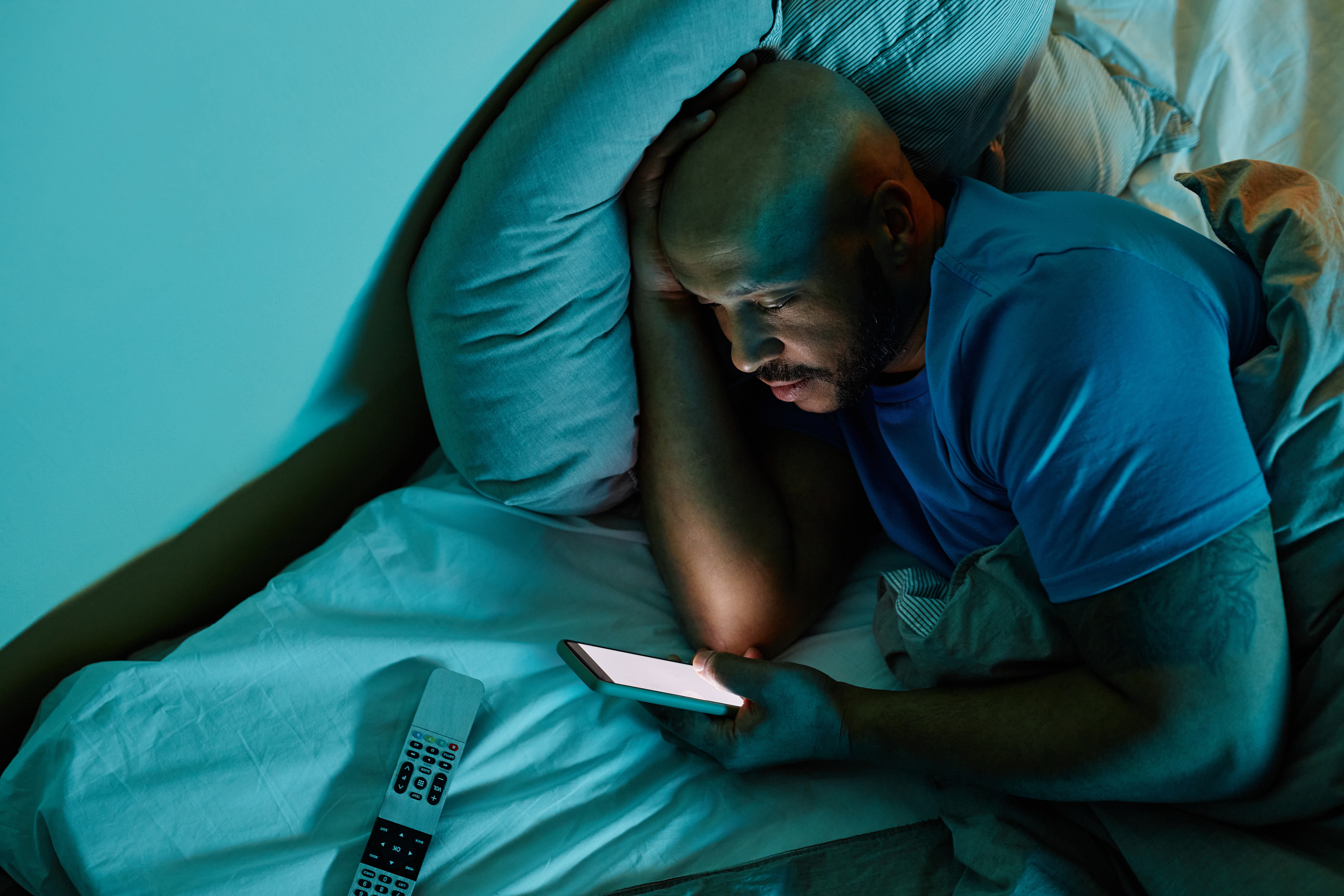
The rule is simple but counterintuitive: If you aren't asleep within about 20 minutes or find yourself feeling anxious or frustrated, get out of the bed.
1. The "Broken Switch" Phenomenon
Think of your bed like a charging station for your phone. When the connection is good, the phone charges. But if the wire is frayed, you can leave it plugged in all night and still wake up with 0%.
In chronic insomnia, the "wire" between your bed and sleep is frayed. Your brain has accidentally learned that Bed = Stress, Planning, and Frustration instead of Bed = Sleep. By staying in bed while awake, you are unintentionally strengthening that negative connection. By getting out of bed when wide awake or upset you are "re-wiring" the switch so your brain recognizes the bed only as a place for rest.
2. The Pavlovian Response: Sleep Reconditioning
You may remember Pavlov’s dogs—they learned to salivate at the sound of a bell because they associated it with food. As humans, we develop similar conditioned responses.
If you spend hours tossing and turning, your bedroom becomes a "conditioned stimulus" for wakefulness. You might find yourself feeling exhausted on the couch, only to become wide awake the moment your head hits the pillow. This is called conditioned arousal. Getting out of bed "breaks the spell" and prevents your brain from practicing being awake in the sleep environment.
3. Creating a "Buffer Zone"
When you get out of bed, the goal isn't to "do chores" or be productive. You are creating a Buffer Zone.
- The Environment: Move to a different room with dim lighting.
- The Activity: Engage in something "mind-neutral"—reading a dry book, listening to a calm podcast, or folding laundry.
You aren't trying to make yourself sleep; you are trying to “reset” to a calm place and simply wait for your sleep drive to take over again.
4. When to Return to Bed
The most common mistake is going back to bed because the clock says you should. Instead, wait until you feel truly clear, calm, and have a sense of a sleep wave returning.
Certainly return to the bedroom when you feel that heavy-lidded sensation. If you get back in and sleep doesn't happen within another 20 minutes? Repeat the process. It may feel frustrating at first, but you are effectively training your brain that the bed is a "sacred space" where only sleep is allowed.
The Bottom Line
Getting out of bed when you can’t sleep is the fastest way to stop the "performance anxiety" of insomnia. It turns the bed back into a place of sanctuary rather than a battlefield.
Chronic sleep struggles often involve complex patterns that benefit from professional support. Cognitive Behavioral Therapy for Insomnia (CBT-I) is the gold-standard approach for Insomnia. If you or someone you know struggles Insomnia or sleep difficulty, a clinician trained in Cognitive-Behavioral Therapy and who has expertise in understanding the intricacies of each can be vital.
About the author
Dr. Robert Yeilding, PsyD
Dr. Yeilding earned his doctorate in Clinical Psychology from the California School of Professional Psychology. He is a Diplomate of the Academy of Cognitive Therapy, and he currently serves as a board member for the National Social Anxiety Center, which is dedicated to fostering evidence-based treatment for social anxiety. Dr. Yeilding specializes in helping adults and adolescents with depressive and anxiety disorders, specializing in treating social anxiety, insomnia, panic disorder, OCD, and managing and finding growth in life transitions. He uses Cognitive-Behavioral Therapy and mindfulness strategies, proven strategies that provide results.
YCBT Services is proud to be the San Clemente regional clinic for the National Social Anxiety Center, which was established to make quality psychotherapy services available to those in need.
Through research, collaboration and educating clinicians and the public, NSAC is committed to improving services and care for people seeking help for social anxiety. Visit NSAC here for more information about Social Anxiety.