The YCBT Services Blog
Last updated February 25, 2026
4 Essential Morning Steps to Help With Sleep Problems
How does a morning routine impact your ability to sleep at night?
A consistent morning routine serves as a vital anchor for your circadian rhythm—the internal biological clock that dictates your sleep-wake cycle. When we struggle with sleep, we often focus solely on the "bedtime" side of the equation. However, by intentionally engaging in specific "wake signals" like sunlight and movement, we can effectively regulate the physiological triggers that allow us to feel tired when the lights go out.
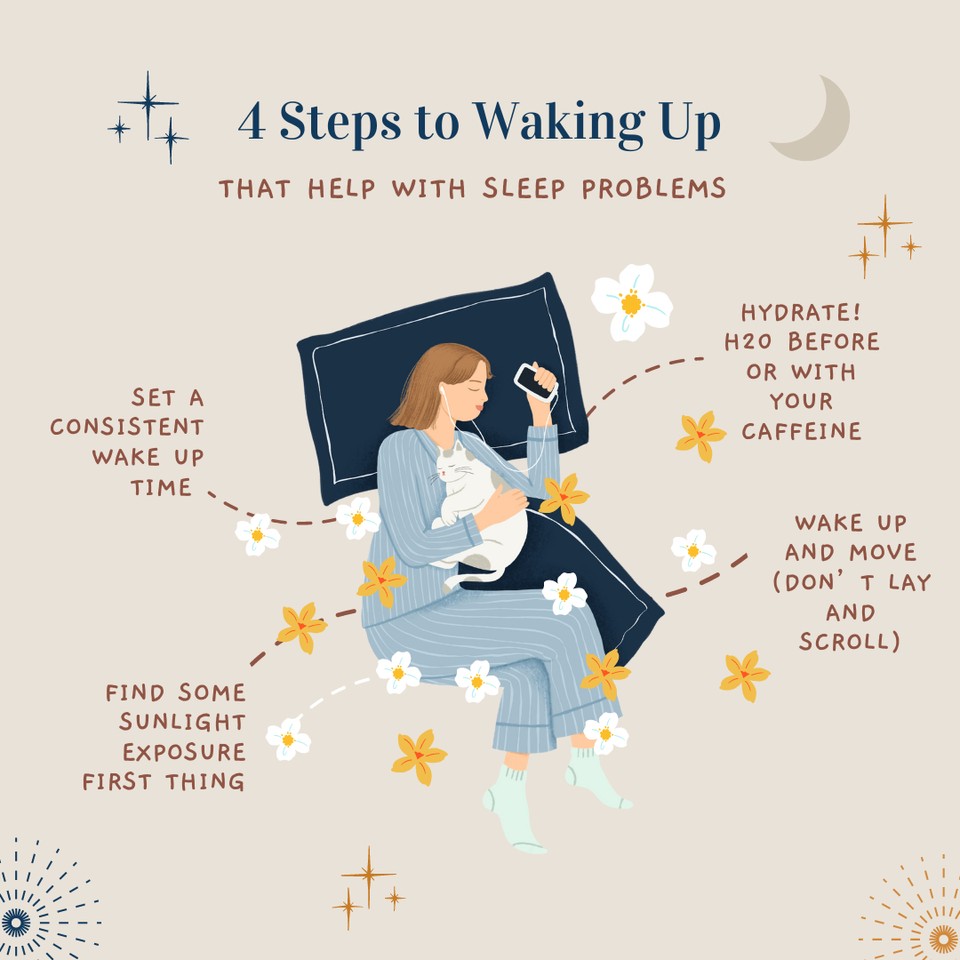
1. Set a Consistent Wake-Up Time
Why is a consistent wake-up time the foundation of sleep health?
Maintaining a regular wake-up time, even on weekends, is the most powerful way to anchor your internal clock. It regulates your "sleep drive"—the buildup of adenosine throughout the day—and ensures your body begins its natural melatonin production at the correct time each evening. At YCBT Services, we encourage patients to choose a time they can realistically maintain seven days a week.
2. Prioritize Sunlight Exposure First Thing
How does morning light shift your internal "negative filter" regarding sleep?
Exposure to natural light soon after waking triggers a healthy release of cortisol, providing morning energy while simultaneously setting a biological timer for melatonin production roughly 14 hours later.
- The Goal: Aim for 5–15 minutes of outdoor light exposure.
- The Clinical Benefit: Natural light is significantly more effective than indoor lighting at suppressing morning grogginess and signaling to your nervous system that the day has begun.
3. Hydrate Before (or With) Your Caffeine
Why is the order of hydration and caffeine so significant?
Many of us reach for caffeine immediately to combat the "fog" of a poor night’s sleep. However, prioritizing 8–12 ounces of water helps stabilize your system first. Dehydration often mimics the fatigue and "decreased energy" we associate with insomnia. By hydrating first, you create a more stable foundation for your energy levels, preventing the late-afternoon caffeine crashes that frequently lead to "sleep-interfering thoughts" and restlessness later that night.
4. Wake Up and Move (Avoid the "Scroll")
Does staying in bed after waking reinforce sleep-related anxiety?
The habit of "laying and scrolling" can unintentionally reinforce a negative association with your bed. When we stay in bed while our minds begin to generate "automatic thoughts" or digital "to-do's," we are training our brains to be active and stimulated in the very place meant for rest.
- The Strategy: Physically get out of bed as soon as you wake up.
- The Shift: Even light movement—like walking to another room—signals to your body that the sleep period has ended. This helps clear "sleep inertia" and prevents the bed from becoming a place of daytime rumination.
Finding Your Path to Restful Sleep
While these behavioral shifts are foundational, chronic sleep struggles often involve complex patterns that benefit from professional support. Cognitive Behavioral Therapy for Insomnia (CBT-I) is the gold-standard approach for identifying and shifting the unhelpful thought and behavioral patterns that keep us trapped in wakefulness.
By developing your own awareness and skill in managing these morning "anchors," you can open up new opportunities to feel rested, clear-headed, and supported by your body’s natural rhythms again.
About the author
Dr. Robert Yeilding, PsyD
Dr. Yeilding earned his doctorate in Clinical Psychology from the California School of Professional Psychology. He is a Diplomate of the Academy of Cognitive Therapy, and he currently serves as a board member for the National Social Anxiety Center, which is dedicated to fostering evidence-based treatment for social anxiety. Dr. Yeilding specializes in helping adults and adolescents with depressive and anxiety disorders, specializing in treating social anxiety, insomnia, panic disorder, OCD, and managing and finding growth in life transitions. He uses Cognitive-Behavioral Therapy and mindfulness strategies, proven strategies that provide results.

YCBT Services is proud to be the San Clemente regional clinic for the National Social Anxiety Center, which was established to make quality psychotherapy services available to those in need.
Through research, collaboration and educating clinicians and the public, NSAC is committed to improving services and care for people seeking help for social anxiety. Visit NSAC here for more information about Social Anxiety.