The YCBT Services Blog
Last updated September 15, 2026
Insomnia and Shy Bladder Syndrome: When "Sleep Effort" Meets "Pee Effort"
You're lying in bed, doing the math on how many hours of sleep you'll get if you fall asleep right now. You squeeze your eyes shut a little tighter. You tell yourself, sternly, to relax. And somehow that makes it worse.
Or maybe it's a different kind of pressure. You're standing at a urinal, or waiting outside a single-stall bathroom, acutely aware that someone could walk in any second. You will your body to just go. Nothing happens. The longer you stand there, the more locked up you feel.
These two moments have almost nothing in common on the surface — one happens in bed at 2am, the other in a public restroom. But they run on the exact same broken logic: the harder you try, the less your body cooperates.
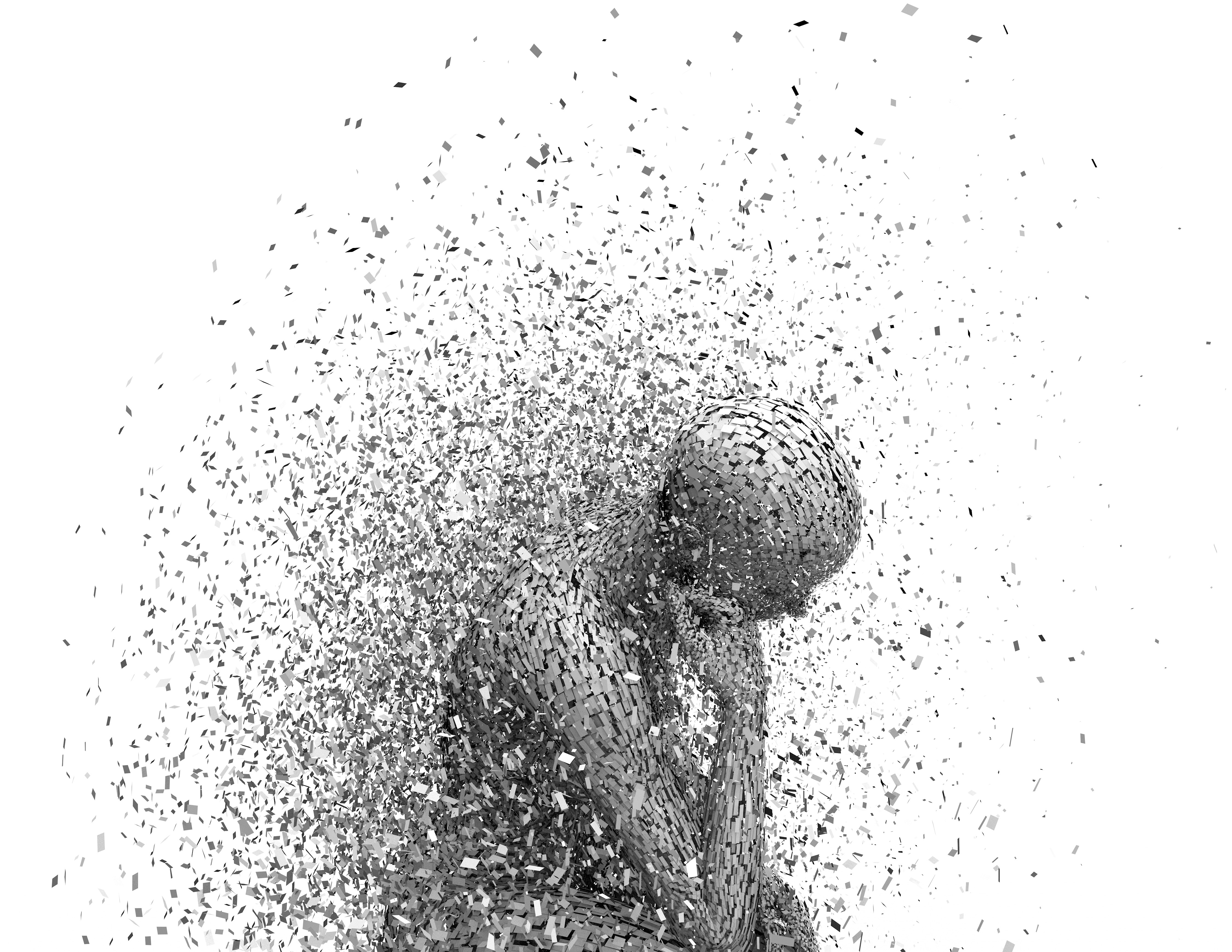
The Concept Clinicians Call "Sleep Effort"
In Cognitive Behavioral Therapy for Insomnia (CBT-I), there's a well-documented phenomenon called sleep effort — the more consciously and forcefully you try to make sleep happen, the more you activate the exact arousal system that keeps you awake. Sleep isn't a task you complete through willpower. It's a state your body drops into once it feels safe enough to stop monitoring itself. Effort is, ironically, evidence to your nervous system that something still needs watching.
That's why "just relax and you'll fall asleep" is such unhelpful advice. Trying to relax on command is still trying — and trying keeps the analytical, vigilant part of your brain switched on, which is precisely the part that needs to power down for sleep to arrive.
Meet "Pee Effort"
Here's the part most people never connect: the same paradox governs shy bladder syndrome, clinically known as paruresis — the anxious difficulty urinating in the presence (or potential presence) of others. It has a formal name, but in the moment, you could just as easily call what's happening "pee effort," because it's the identical trap wearing a different outfit.
Voiding, like falling asleep, depends on your body relaxing enough to let go of conscious control. The muscles involved need to release, not be commanded. But when you're worried about being overheard, judged, or taking "too long," your nervous system shifts into threat mode — and threat mode tightens exactly the muscles that need to loosen. The urge you felt a minute ago fades, and now you're standing there working harder at something your body was designed to do automatically.
The more you concentrate on making it happen, the more your body reads that concentration as danger, and the further away "just going" gets. That's pee effort — and if you've lived it, you already know how maddening the loop is. It's not embarrassing in the way it feels in the moment; it's your nervous system doing exactly what anxious nervous systems do.
Why Awareness Backfires in Both Cases
Sleep and voiding are both semi-involuntary. You can set the conditions for them, but you can't force either one directly — the moment you try, you've shifted your attention onto your own body's performance, which is the opposite of what either process needs. Psychologists sometimes call this "spectatoring": watching yourself do a thing instead of just doing it, which reliably interferes with anything the body was built to do without supervision.
Add anxiety about being watched, judged, or failing — a partner in bed wondering why you're still awake, or a stranger in the next stall — and you've built a self-reinforcing loop. Anxiety blocks the natural process, the blocked process increases anxiety, and avoidance (dreading bedtime, scouting bathrooms in advance, skipping public restrooms altogether) starts to feel like the only relief available. It usually isn't real relief — it just narrows your life around the fear.
Loosening the Grip
The way out of both loops isn't more effort — it's building tolerance for the discomfort of not trying so hard, gradually, with support. For insomnia, that often means structured approaches like CBT-I: techniques that retrain your relationship to bedtime rather than forcing sleep through sheer will. For paruresis, it typically means graduated exposure — practicing in progressively more challenging, but manageable, restroom situations until your nervous system stops treating them as threats.
Neither happens overnight, and neither responds well to gritting your teeth harder. If sleep effort or pee effort sounds familiar, the most useful shift isn't trying harder — it's getting the right kind of support to stop trying so hard in the first place.
Quick Answers
Is shy bladder syndrome a real anxiety condition? Yes. Paruresis is a recognized form of social anxiety involving fear of judgment while urinating in the presence of others, and it responds to the same evidence-based approaches used for other anxiety disorders.
Can trying too hard to fall asleep actually cause insomnia? Yes — this is the basis of "sleep effort," a well-studied concept in CBT-I. Conscious, forceful attempts to sleep increase mental arousal, which works against the passive letting-go that sleep onset requires.
What's the fastest way to break either cycle? There isn't a fast fix, but professional treatment — CBT-I for sleep, graduated exposure for paruresis — is the most reliable path, since both work by gradually reducing the anxiety driving the effort, rather than fighting the symptom head-on.
If you or someone you know struggles with Insomnia or Paruresis, a clinician trained in Cognitive-Behavioral Therapy and who has expertise in understanding the intricacies of each can be vital. Learn more here.
About the author
Dr. Robert Yeilding, PsyD
Dr. Yeilding earned his doctorate in Clinical Psychology from the California School of Professional Psychology. He is a Diplomate of the Academy of Cognitive Therapy, and he currently serves as a board member for the National Social Anxiety Center, which is dedicated to fostering evidence-based treatment for social anxiety. Dr. Yeilding specializes in helping adults and adolescents with depressive and anxiety disorders, specializing in treating social anxiety, insomnia, panic disorder, OCD, and managing and finding growth in life transitions. He uses Cognitive-Behavioral Therapy and mindfulness strategies, proven strategies that provide results.
YCBT Services is proud to be the San Clemente regional clinic for the National Social Anxiety Center, which was established to make quality psychotherapy services available to those in need.
Through research, collaboration and educating clinicians and the public, NSAC is committed to improving services and care for people seeking help for social anxiety. Visit NSAC here for more information about Social Anxiety.